Friday, October 25, 2013
Human-Not-Quite-Human
“Professor Bract, although a distinguished botanist, is not in any way an unmanly man. He has, in fact, a wife and seven children. Tall and burly, the hands with which he handles his delicate specimens are as gnarled and powerful as those of a Canadian lumberjack, and when I swilled beer with him in his laboratory, he bawled his conclusions at me in a strong, gruff voice that implemented the promise of his swaggering moustache.” Dorothy L. Sayers, in “The Human-Not-Quite-Human”, 1947
[From Things Cory Doctorow saw.]

Tuesday, September 17, 2013
Wayne Morse Free Speech Spot
From The Register-Guard, Eugene, OR
Commissioners approve rules on plaza hours
"As part of the rule change, the county is now calling the area the Wayne Morse Terrace instead of its more commonly used name, the Wayne Morse Free Speech Plaza. A smaller area within the concrete plaza is now the designated free speech area."

"
Saturday, September 14, 2013
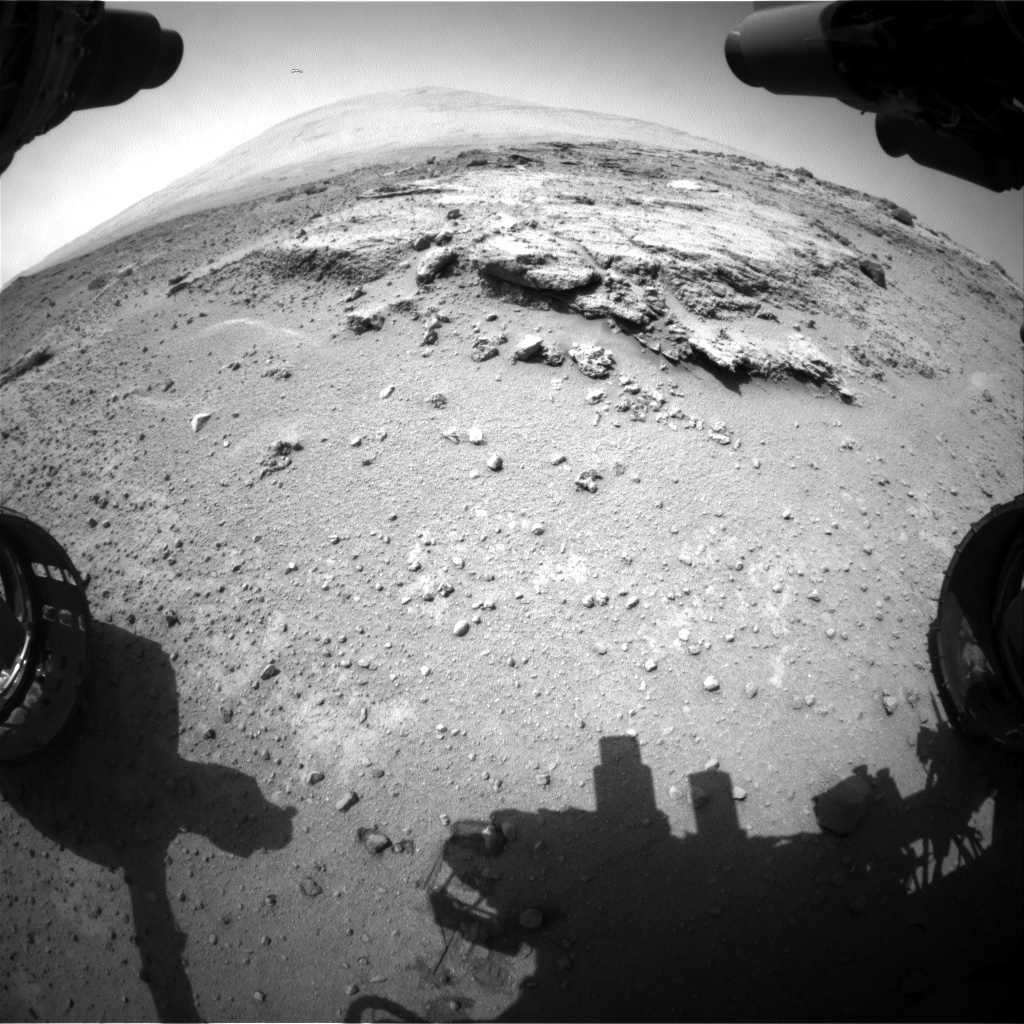
Mars, Waypoint 1 breccia (Darwin)
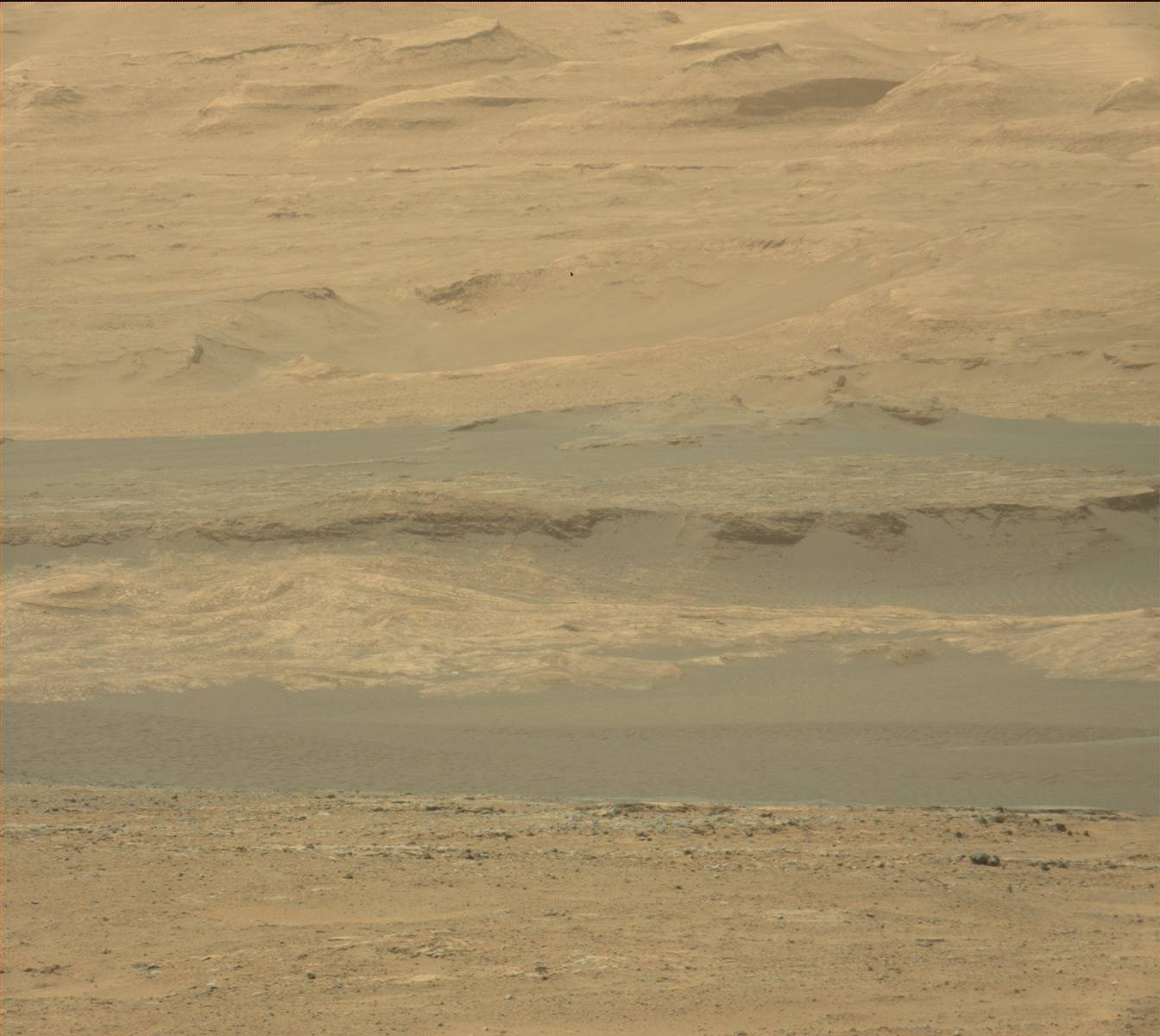
Curiosity's view from Waypoint 1, across the basin of Gale Crater. Foothills of Mount Sharp at top, a smaller crater in the middle, and a larger crater partly covered by sand drifts (bluish) extending across the frame:
[original image: 0387MR1588005000E1_DXXX.jpg, contrast stretched to highlight structure and color differences.]


[original image: 0394MH0190001002C0_DXXX.jpg, contrast stretched to highlight structure and color differences.]

The red rectangle, below on left, indicates the approximate field of view of the above image:
[original image: PIA17481.jpg, contrast stretched to highlight structure and color differences.]


[original image: 0387MR1588005000E1_DXXX.jpg, contrast stretched to highlight structure and color differences.]

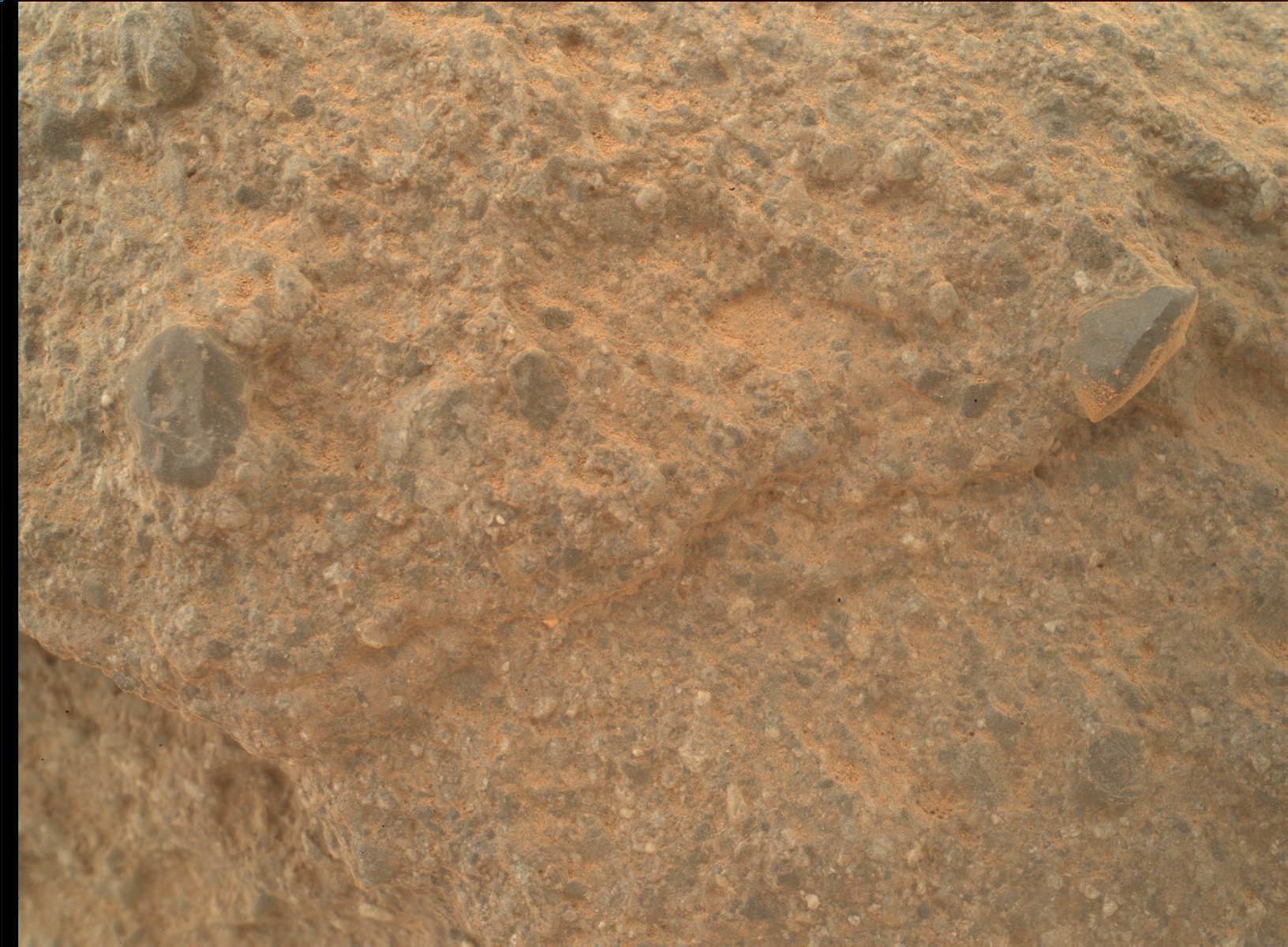
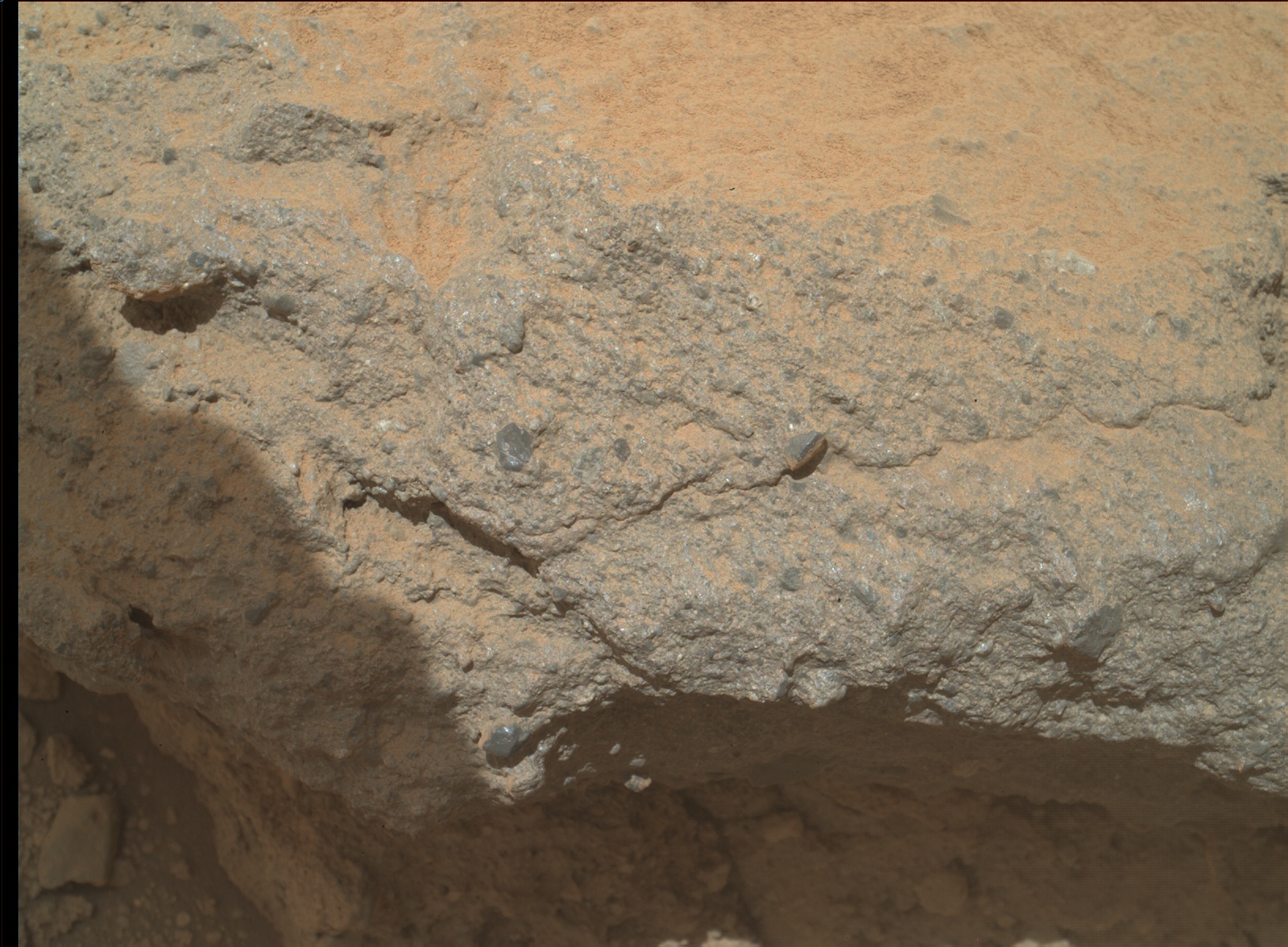
Darwin is a rock outcrop at Waypoint 1 that's getting a close look for clues relevant to the geologic and hydrologic history of Gale Crater. Below is a series of images, from very close-up, to wide angle. Apparently it is a breccia, or possibly a conglomerate:
[original image: cropped from 0394MH0306001001C0_DXXX.jpg (see below), contrast stretched to highlight structure and color differences and sharpened.]

[original image: 0394MH0306001001C0_DXXX.jpg, flat lighting (in shadow) highly contrast stretched to highlight structure and color differences.]


The red rectangle, below on left, indicates the approximate field of view of the above image:
[original image: PIA17481.jpg, contrast stretched to highlight structure and color differences.]
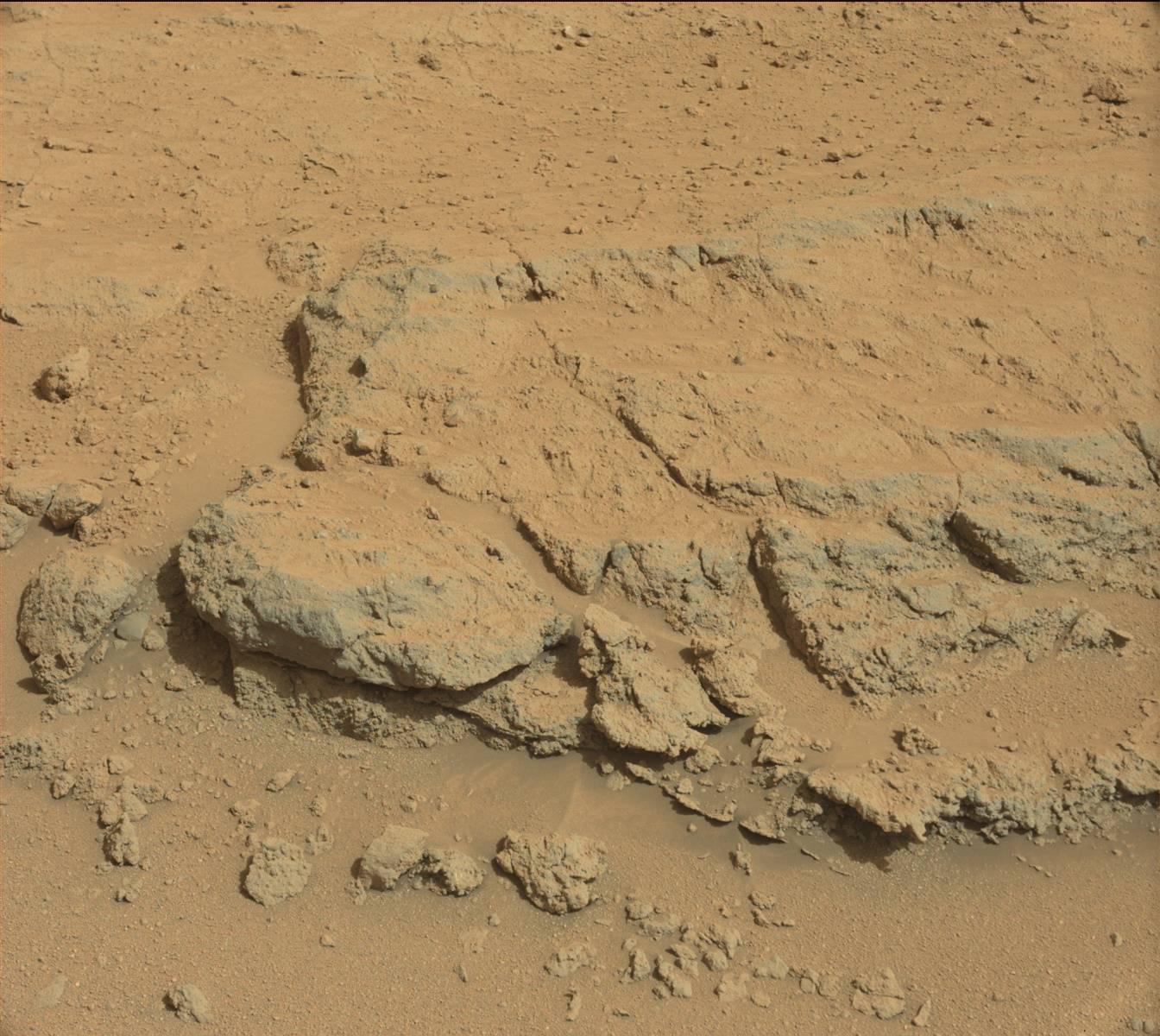

Hazard camera wide angle shot, with Darwin at center and Mount Sharp in background:

Saturday, June 29, 2013
Martian crusts
There are many thin crusty structures on Mars. Curiosity's mast camera took this pic, including different types of rock with a planar form. Apparently these are often formed by consolidation of sedimentary material, and later excavated by a thin sandblasting wind. But the range of physical processes that formed them are not clear.
[original image: 0317ML1300021000E1_DXXX.jpg, contrast stretched to highlight structure and color differences.]


Sunday, May 19, 2013
Excerpt of [news media], from [paper of record], [today's date]
[Country/state] television captured clear images as a mob of more than [a large number] attacked a small [minority rights] march, sending at least [a number of] people to the hospital.
[Religious figure] who helped to organize the [counter-event] said that while the violence was “regrettable” and those who committed it should be punished, the [religious organization] was obligated to protest the [event] and would “not allow anyone to humiliate us.”
“When there are so many people, it is difficult to speak only about [religious persuasion] and morals,” said the [religious figure] in his [day of the week] sermon. “Many were not able to overcome their nature and saw enemies in the others, said bad words and punched them. I was told [religious figures] were among them. I am not able to either condemn or justify them. They are also humans.”
[Religious figurehead], after the violence, urged protesters to leave the streets and for both sides “to pray for one another.”
“We do not accept violence,” [religious figurehead] said. “But it’s also unacceptable to give propaganda” to [minority group].
“We have already gone too far by having [minority group] openly promoting their [viewpoint],” a [adult professional] said. “This is unacceptable! By allowing things like this, we let [country/state] turn from the road of its traditional destiny.”
“Arrests will be too much; it will help to further excite the situation in [country/state],” she added.
[A teenager] said that while she opposed the violence, she believed that the “truth was on the side of the [religious organization].”
“No one should be punished for this,” she said. “This is for [a deity] to judge them, not us.”
Saturday, March 30, 2013
Brain replacement
When computational hardware needs replacement, there is some discretion as to how to re-instantiate software. If the new hardware is functionally equivalent, or can emulate the old hardware, a direct copy of a large fraction of software is appealing for its potential simplicity. If not, more forethought is necessary.
In my case I'm transferring between very similar hardware, an older MacBook and a newer MacBook. There is software to manage the copy (Migration Assistant), but Apple-think has decided that the ethernet cable is to be deprecated. Like the floppy drive (iMac 1998), 8P8C is archaic technology (MacBook Pro, 2012); not white, shiny or invisible. Radio-frequency EM communication is an option, but slow -- two days is too long to be without a brain to tinker with.
So a purpose built dongle was grudgingly desirable. $29 worth of grudge and desire. Even with a copper wire channel I had time to watch the Oregon Duck's lose a basketball game during the copy operation. No brain required.

The hardware and GUI interfaces on the new and old are strikingly similar, particularly the operator defined elements. It's a bit disconcerting. Is this what it feels like to be a clone, the same in more ways than is comfortable for two bodies?

This feeling is amplified by shared remote memory. Evernote and Dropbox were seamless, but Google Drive failed in recognizing the copied directory ("This is not your original Google Drive folder."), and a renamed copy of the copy was needed, with proper incantations supplied by a Google search. It was a visceral reminder that all is not truly identical to what was.
In the recent past the many steps of getting a new machine up and running was manually reviewed, perhaps while swapping numbered floppy disks and cups of tea while waiting, forcing a reflection on the process. This brave new body hides more than it reveals. There is less need to know or reknow what is unique or unknown about a fresh brain.

There will always be glitches, rare interactions between an increasing number of software and hardware combinations. Bits of gnarl, comforting reminders that a clone is an imperfect copy of an imperfect copy.

Monday, March 25, 2013
Curiosity self-inspection
Function and reliability are primary design criteria for an expensive robot in a remote environment. Many of Curiosity's imaging systems are put to use looking at itself, not its target, Mars.
Curiosity is minimally autonomous, particularly with respect to self-inspection and troubleshooting. Robots of the future will need to include a detailed functional self-map, and the capability to compare the map with ground truth. Then they will need to decide what to do.
I'm surprised at how Curiosity's exterior design came out having a complex, art-deco look; many interacting parts means many failure modes. This photo is from a mast camera after waiting for a good sun angle.
original image: 0224ML1058000000E1_DXXX.jpg


Monday, March 11, 2013
Julio Cortázar, axolotl
"I saw from very close up the face of an axolotl immobile next to the glass. No transition and no surprise, I saw my face against the glass, I saw it on the outside of the tank, I saw it on the other side of the glass. Then my face drew back and I understood."
"Axolotl", by Julio Cortázar

[3/14/13 A relevant image I ran across here, Cortázar and camera and cat:]

Saturday, March 2, 2013
private robot spaceship launch
SpaceX CRS-2:
SpaceX CRS-2 is the fourth flight for SpaceX's uncrewed Dragon cargo spacecraft, the fifth and final flight for the company's two-stage Falcon 9 v1.0 launch vehicle, and the second SpaceX operational mission contracted to NASA under a Commercial Resupply Services contract.
The launch occurred on 1 March 2013. A minor technical issue on the Dragon module involving the thruster pods and solar panels occurred upon reaching orbit, but it was recoverable and solar panels were deployed after an hour delay.
The launch video is amazing. There is little action and only a few scene changes, but these are jaw-dropping: earth to space, first stage to second stage, orbital deployment.
 |
| Falcon 9 second stage just after ignition, illuminating the ejected first stage. |
 |
| Falcon 9 second stage exhaust nozzle, glowing orange hot. |
 |
| Falcon 9 second stage just after shutdown. "Vehicle is orbital." |
Both stages of this two-stage-to-orbit vehicle use liquid oxygen (LOX) and rocket-grade kerosene (RP-1) propellants. The Falcon 9 can lift payloads of 13,150 kilograms (29,000 lb) to low Earth orbit, and 4,850 kilograms (10,700 lb) to geostationary transfer orbit, which places the Falcon 9 design in the medium-lift range of launch systems.
SpaceX uses multiply-redundant flight computers. Each Merlin engine is controlled by three voting computers (each composed of two physical processors constantly checking each-other) to instantiate a fault-tolerant design. For flexibility, commercial off-the-shelf parts and system-wide "radiation-tolerant" design are used instead of rad-hardened parts. The software runs Linux and was written in C++.
If all goes well Dragon will dock with the International Space Station tomorrow, 3 March 2013:

Done:
 |
| Dragon ISS docking, grappled with Canadarm2 on 3 March, 2013 |
Dragon's unberthing, release and splashdown are planned for 25 March 2013. The Dragon will return 3,020 lb (1,370 kg) of cargo, 2,668 lb (1,210 kg) without packaging. Included is 210 lb (95 kg) of crew supplies, 1,455 lb (660 kg) of scientific experiments and experiment hardware, 884 lb (401 kg) of space station hardware, 84 lb (38 kg) of spacesuit equipment and other miscellaneous items.
Wednesday, February 13, 2013
Trinity draft press release
Form A
Statement of Commanding Officer, Almagordo Air Base
1 2 3 4 5 6 7 8 9
Several inquiries have been received concerning a heavy explosion
10 11 12 13 14 15 16 17 18 19 20
which occurred on the Almogordo Air Base Reservation this morning. A
21 22 23 24 25 26 27 28 29
remotely located ammunition magazine containing a considerable amount of
30 31 32 33 34 35 36 37 38 39 40 41 42 43 44
high explosive exploded. There was no loss of life or injury to any one and
45 46 47 48 49 50 51 52 53 54 55
the property damage outside of the explosives magazine itself was negligible.
56 57 58 59 60 61 62 63 64 65 66
Weather conditions affecting the content of gas shells exploded by the
67 68 69 70 71 72 73 74 75 76 77 78
blast made it desirable to evacuate some civilians from a small nearby
79 80
inhabited area.
81 82 83
The dead were:
84
(Names)
Subscribe to:
Posts (Atom)