A space-time crystal is a dynamical system that is periodic in time and space, analogous to a crystal which is periodic in space. Some physicists think that actually atomic scale physical systems can take this form, and be stable long enough to explore their properties. Or perhaps stable enough to survive the heat death of the universe!
"Can matter cycle through shapes eternally?
'Time crystals' idea is challenged but its proponent doubles down."
Here's a 3-D (time x 2-spatial dimensions) space-time crystal, composed of elastic collisions of particles on a plane:
Wednesday, February 26, 2014
Wednesday, December 4, 2013
I think I can ...
Opportunity sent this sublime postcard from Solander Point, taken November 12, 2013. [2018 update: The rover is still functioning well, at 13+ years into the mission, about 38 times its design lifetime.] (source and description)
[2018 update: It is still climbing, looking for a good view of Endeavour crater's rim layering and morphology, and finding a comfortable slope to soak up sun during the coming winter. (source and description)]
Here's a composite pic of Burns Cliff, in Endurance Crater, back in November 2004. (original composite and description, with stretched colors)
Sunday, November 17, 2013
Cover Oregon fail
Software is hard, and large software systems can't be implemented without failure, correction and changes to the specifications.
But this example from Cover Oregon (Oregon's Obamacare implementation) is worse than broken:
Submit online (for IE users only)
| Before you start filling out your application for health insurance and financial assistance, here are some things you should do and know: |
| 1) Use the correct browser |
This online application is built and tested for use with Internet Explorer. Using other browsers may cause
the form to not work properly. Important: The "submit" button does not work when used with the
Macintosh Safari or Google Chrome browsers. Please do not use Macintosh Safari or Google Chrome browsers with this application. Update 1/12/14: Now there is a more complete explanation of how the site is worse than broken, with the same liberal use of bold:
Important:
|
Friday, October 25, 2013
Human-Not-Quite-Human
“Professor Bract, although a distinguished botanist, is not in any way an unmanly man. He has, in fact, a wife and seven children. Tall and burly, the hands with which he handles his delicate specimens are as gnarled and powerful as those of a Canadian lumberjack, and when I swilled beer with him in his laboratory, he bawled his conclusions at me in a strong, gruff voice that implemented the promise of his swaggering moustache.” Dorothy L. Sayers, in “The Human-Not-Quite-Human”, 1947
[From Things Cory Doctorow saw.]
Tuesday, September 17, 2013
Wayne Morse Free Speech Spot
From The Register-Guard, Eugene, OR
Commissioners approve rules on plaza hours
"As part of the rule change, the county is now calling the area the Wayne Morse Terrace instead of its more commonly used name, the Wayne Morse Free Speech Plaza. A smaller area within the concrete plaza is now the designated free speech area."
"
Saturday, September 14, 2013
Mars, Waypoint 1 breccia (Darwin)
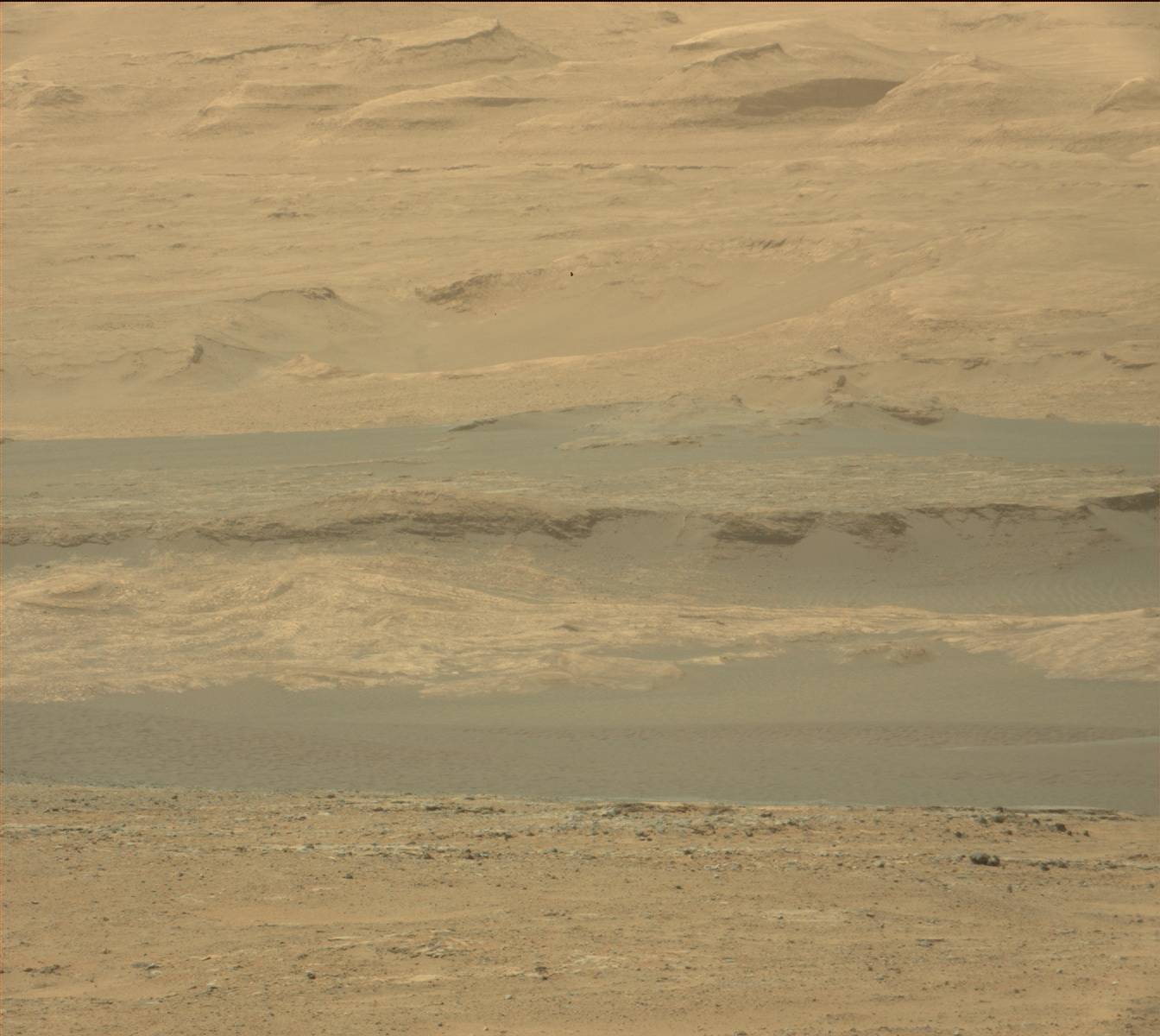
Curiosity's view from Waypoint 1, across the basin of Gale Crater. Foothills of Mount Sharp at top, a smaller crater in the middle, and a larger crater partly covered by sand drifts (bluish) extending across the frame:
[original image: 0387MR1588005000E1_DXXX.jpg, contrast stretched to highlight structure and color differences.]

[original image: 0394MH0190001002C0_DXXX.jpg, contrast stretched to highlight structure and color differences.]
The red rectangle, below on left, indicates the approximate field of view of the above image:
[original image: PIA17481.jpg, contrast stretched to highlight structure and color differences.]
[original image: 0387MR1588005000E1_DXXX.jpg, contrast stretched to highlight structure and color differences.]

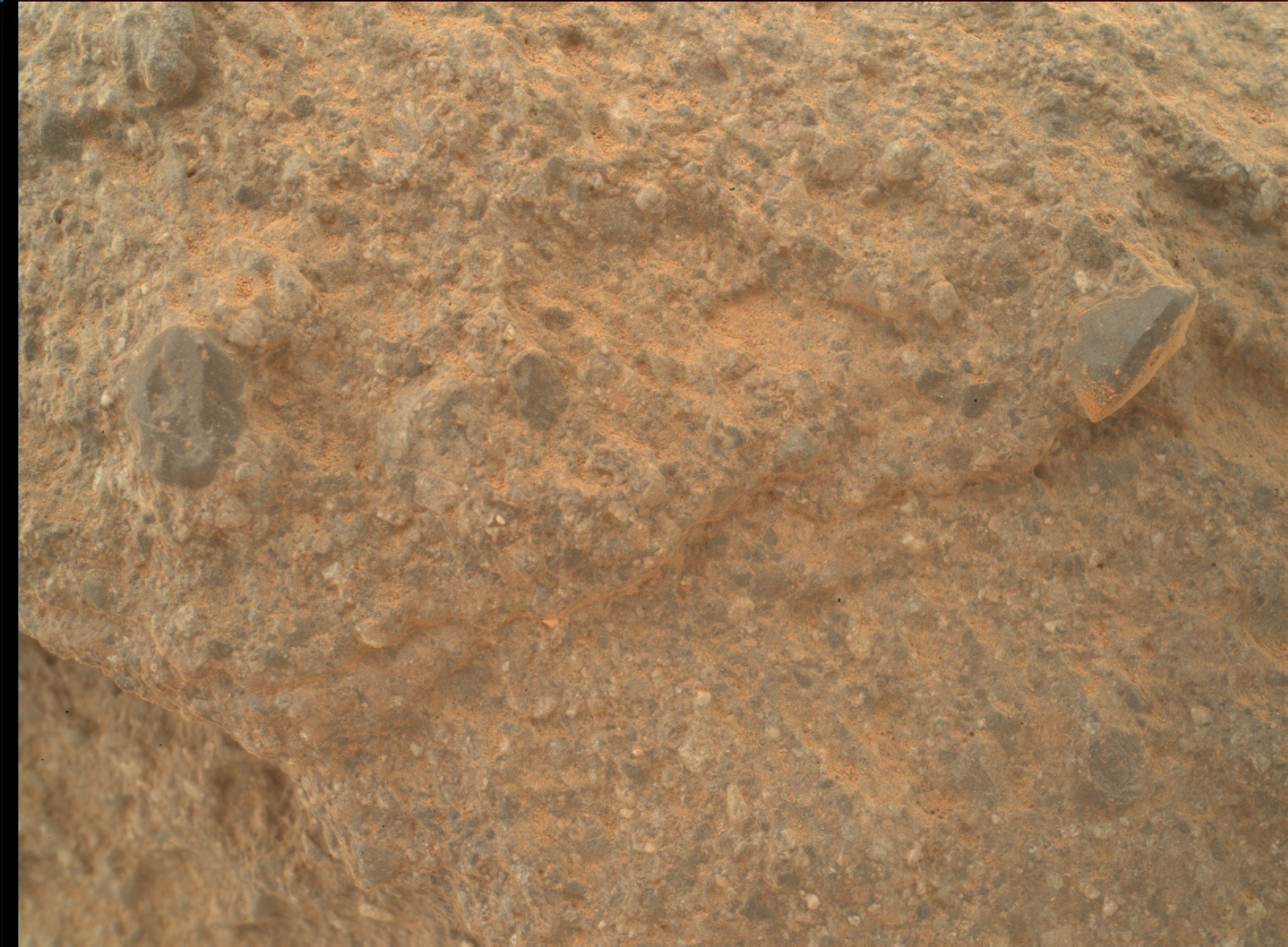
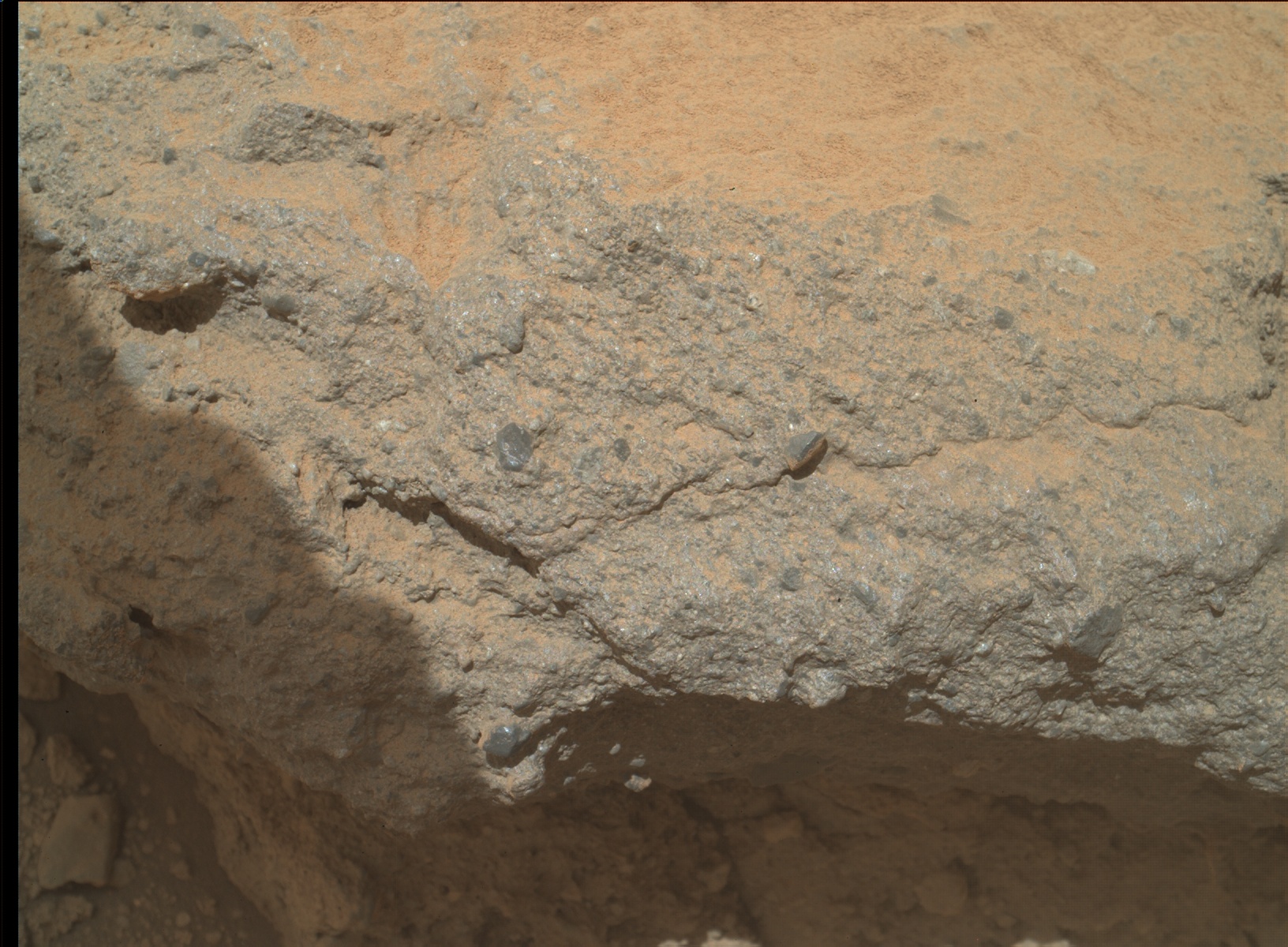
Darwin is a rock outcrop at Waypoint 1 that's getting a close look for clues relevant to the geologic and hydrologic history of Gale Crater. Below is a series of images, from very close-up, to wide angle. Apparently it is a breccia, or possibly a conglomerate:
[original image: cropped from 0394MH0306001001C0_DXXX.jpg (see below), contrast stretched to highlight structure and color differences and sharpened.]
[original image: 0394MH0306001001C0_DXXX.jpg, flat lighting (in shadow) highly contrast stretched to highlight structure and color differences.]
The red rectangle, below on left, indicates the approximate field of view of the above image:
[original image: PIA17481.jpg, contrast stretched to highlight structure and color differences.]
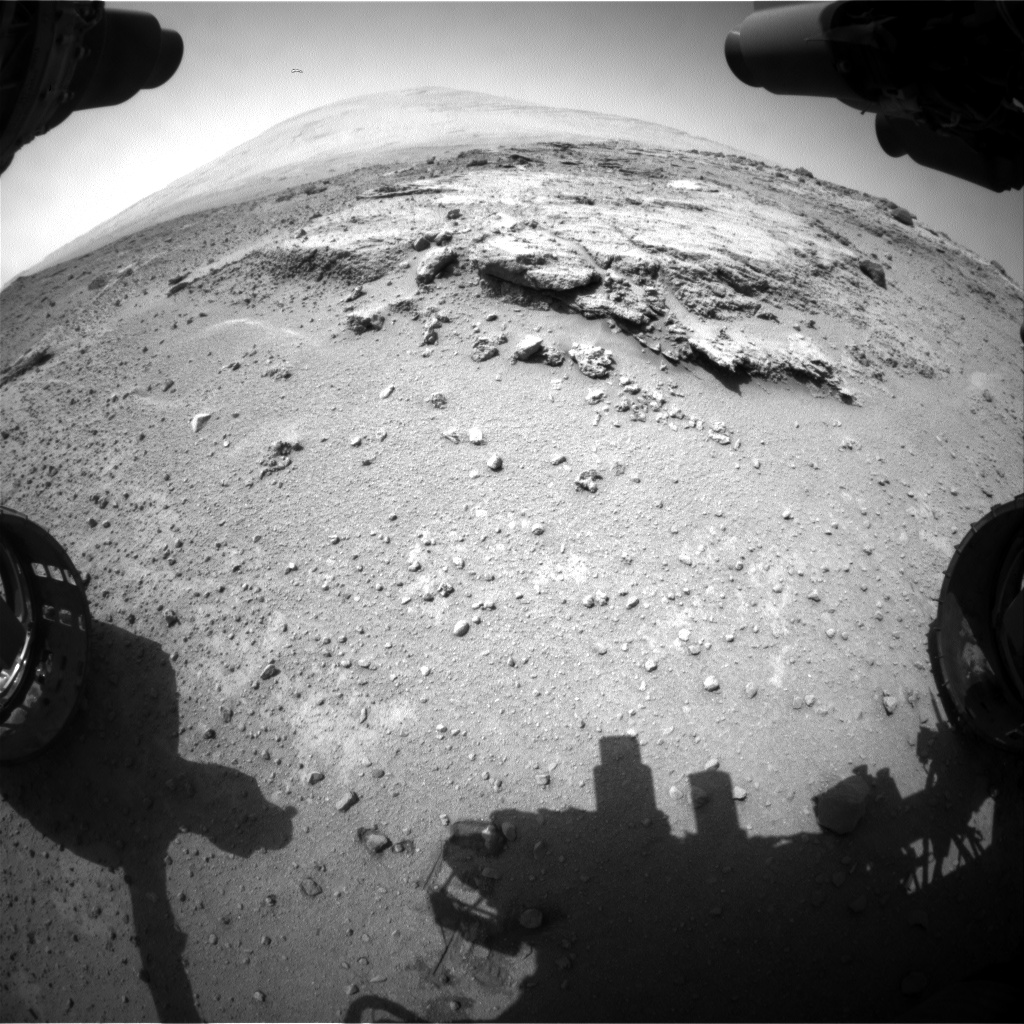
Hazard camera wide angle shot, with Darwin at center and Mount Sharp in background:
Saturday, June 29, 2013
Martian crusts
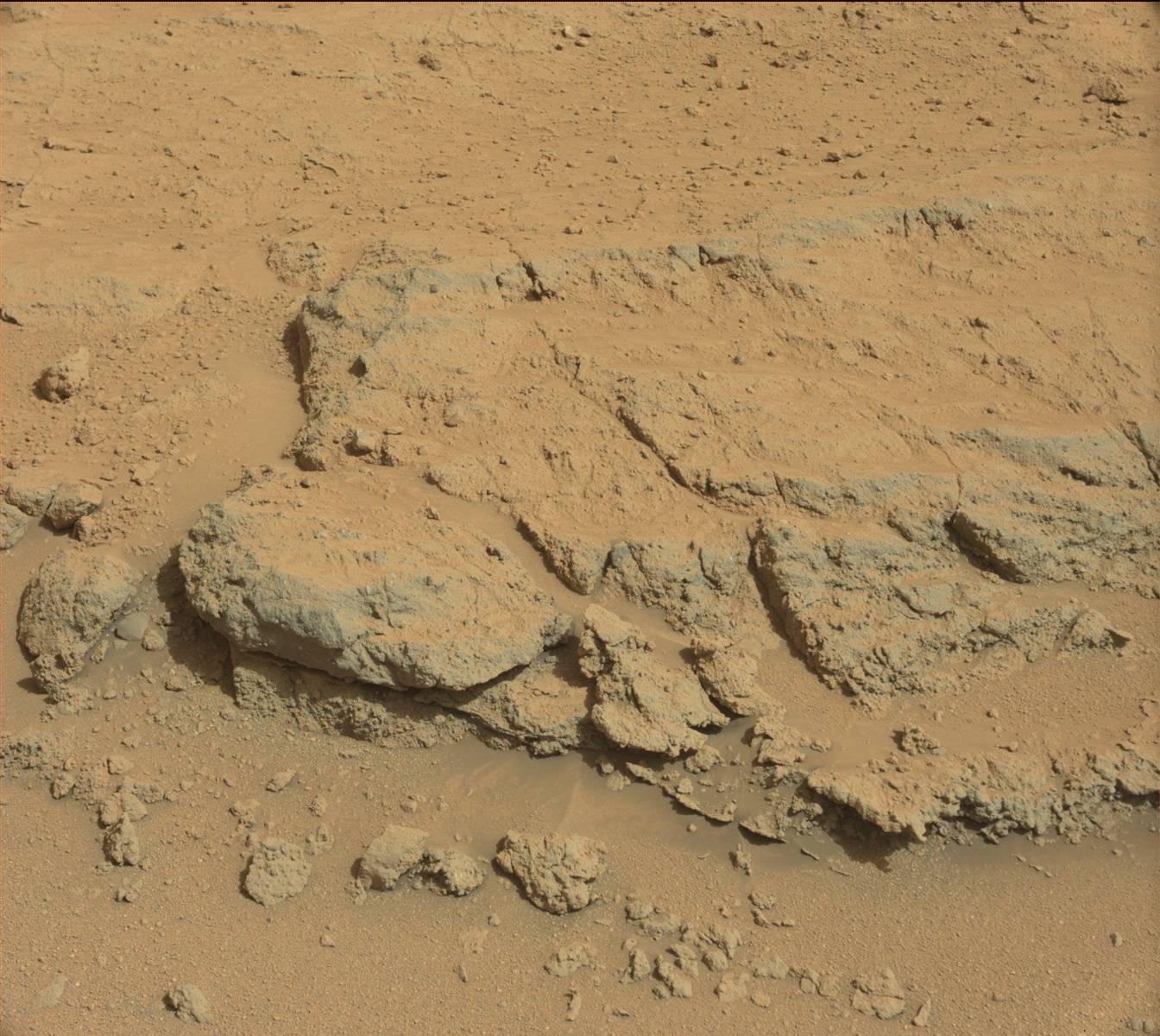
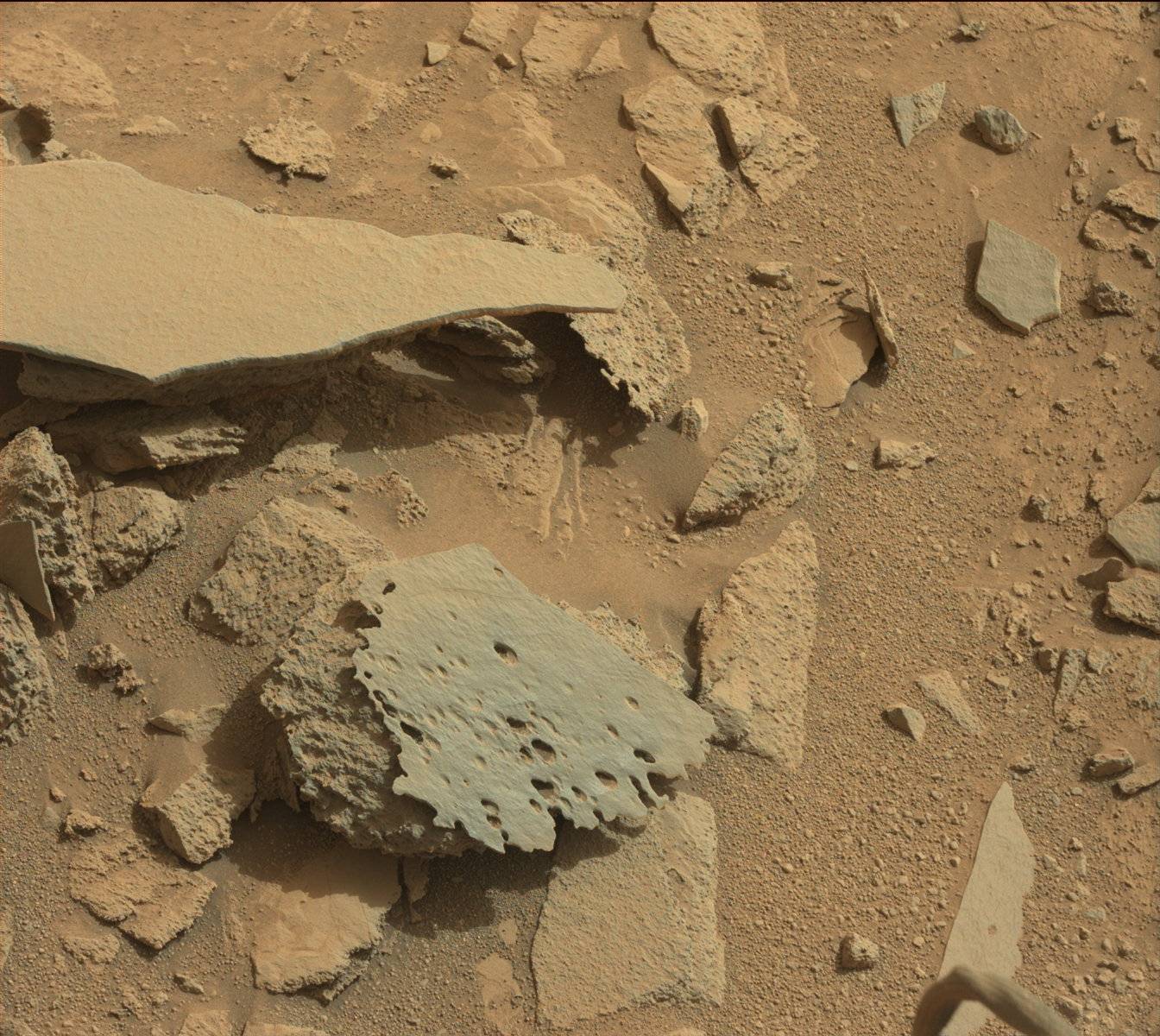
There are many thin crusty structures on Mars. Curiosity's mast camera took this pic, including different types of rock with a planar form. Apparently these are often formed by consolidation of sedimentary material, and later excavated by a thin sandblasting wind. But the range of physical processes that formed them are not clear.
[original image: 0317ML1300021000E1_DXXX.jpg, contrast stretched to highlight structure and color differences.]
Sunday, May 19, 2013
Excerpt of [news media], from [paper of record], [today's date]
[Country/state] television captured clear images as a mob of more than [a large number] attacked a small [minority rights] march, sending at least [a number of] people to the hospital.
[Religious figure] who helped to organize the [counter-event] said that while the violence was “regrettable” and those who committed it should be punished, the [religious organization] was obligated to protest the [event] and would “not allow anyone to humiliate us.”
“When there are so many people, it is difficult to speak only about [religious persuasion] and morals,” said the [religious figure] in his [day of the week] sermon. “Many were not able to overcome their nature and saw enemies in the others, said bad words and punched them. I was told [religious figures] were among them. I am not able to either condemn or justify them. They are also humans.”
[Religious figurehead], after the violence, urged protesters to leave the streets and for both sides “to pray for one another.”
“We do not accept violence,” [religious figurehead] said. “But it’s also unacceptable to give propaganda” to [minority group].
“We have already gone too far by having [minority group] openly promoting their [viewpoint],” a [adult professional] said. “This is unacceptable! By allowing things like this, we let [country/state] turn from the road of its traditional destiny.”
“Arrests will be too much; it will help to further excite the situation in [country/state],” she added.
[A teenager] said that while she opposed the violence, she believed that the “truth was on the side of the [religious organization].”
“No one should be punished for this,” she said. “This is for [a deity] to judge them, not us.”
Saturday, March 30, 2013
Brain replacement
When computational hardware needs replacement, there is some discretion as to how to re-instantiate software. If the new hardware is functionally equivalent, or can emulate the old hardware, a direct copy of a large fraction of software is appealing for its potential simplicity. If not, more forethought is necessary.
In my case I'm transferring between very similar hardware, an older MacBook and a newer MacBook. There is software to manage the copy (Migration Assistant), but Apple-think has decided that the ethernet cable is to be deprecated. Like the floppy drive (iMac 1998), 8P8C is archaic technology (MacBook Pro, 2012); not white, shiny or invisible. Radio-frequency EM communication is an option, but slow -- two days is too long to be without a brain to tinker with.
So a purpose built dongle was grudgingly desirable. $29 worth of grudge and desire. Even with a copper wire channel I had time to watch the Oregon Duck's lose a basketball game during the copy operation. No brain required.
The hardware and GUI interfaces on the new and old are strikingly similar, particularly the operator defined elements. It's a bit disconcerting. Is this what it feels like to be a clone, the same in more ways than is comfortable for two bodies?
This feeling is amplified by shared remote memory. Evernote and Dropbox were seamless, but Google Drive failed in recognizing the copied directory ("This is not your original Google Drive folder."), and a renamed copy of the copy was needed, with proper incantations supplied by a Google search. It was a visceral reminder that all is not truly identical to what was.
In the recent past the many steps of getting a new machine up and running was manually reviewed, perhaps while swapping numbered floppy disks and cups of tea while waiting, forcing a reflection on the process. This brave new body hides more than it reveals. There is less need to know or reknow what is unique or unknown about a fresh brain.
There will always be glitches, rare interactions between an increasing number of software and hardware combinations. Bits of gnarl, comforting reminders that a clone is an imperfect copy of an imperfect copy.
Monday, March 25, 2013
Curiosity self-inspection
Function and reliability are primary design criteria for an expensive robot in a remote environment. Many of Curiosity's imaging systems are put to use looking at itself, not its target, Mars.
Curiosity is minimally autonomous, particularly with respect to self-inspection and troubleshooting. Robots of the future will need to include a detailed functional self-map, and the capability to compare the map with ground truth. Then they will need to decide what to do.
I'm surprised at how Curiosity's exterior design came out having a complex, art-deco look; many interacting parts means many failure modes. This photo is from a mast camera after waiting for a good sun angle.
original image: 0224ML1058000000E1_DXXX.jpg
Subscribe to:
Posts (Atom)